Launch monitor · priced July 2, 2026
Garmin Approach R10 Cost: $499.99, Is It Enough?
The Garmin R10 is $499.99 and the default answer for anyone starting under $3,000. What it gets right, where it falls short, and who should skip it.
- Doppler radar, not camera
- 10-hour battery, USB-C
- Full swing + putting data
- Works with GSPro, E6 Connect, Awesome Golf
- No mandatory subscription for core data
Via PlayBetter Partners. As an Amazon Associate and affiliate partner, CaddieBay earns from qualifying purchases.
The R10 is the reason most budget builds start at $500 instead of $1,500. It’s a Doppler radar unit, the same underlying tech Garmin uses in its outdoor rangefinders, shrunk into a puck you set behind the ball. No camera, no swing-path mat sensor, just radar tracking the ball off the face.
That puck directly measures seven parameters: ball speed (accurate to about ±1 mph), clubhead speed (±3 mph), launch angle and launch direction (±1 degree each), face angle (±2 degrees), angle of attack, and backswing/downswing timing. Everything else you see on screen, spin rate, spin axis, carry distance, smash factor, apex height, is calculated from those seven inputs rather than measured directly. Garmin’s own published tolerance on carry distance is ±5 yards; independent testers who logged shots against a second monitor found the real-world gap averaged closer to 6.4 yards, or about 4.6% of total distance. That’s a solid number for a $500 radar unit and roughly in line with what Garmin advertises, not a marketing overstatement.
That matters because radar units read ball flight, not swing mechanics. Carry distance and ball speed come back solid. Spin rate is the number to watch, and here the R10 has a real dependency most reviews bury in a footnote: indoors, it estimates spin with a machine-learned model built from the radar data it can see, not from watching the ball actually rotate. Outdoors, it can track enough of the ball’s flight to calculate spin from trajectory directly, which is the more reliable method. Garmin also sells Titleist RCT golf balls with embedded chips specifically to sharpen indoor spin readings; without them, expect deviation numbers, the left-right shot shape data, to run 10-15 yards off from what a camera-based unit like a Foresight GC3 would show on the same swing. That’s not a defect so much as a tradeoff baked into choosing radar over cameras at this price.
What it does well
Full-swing practice is the R10’s actual job, and it does it at a price no camera-based unit touches. Independent reviewers consistently rank it the best sub-$1,000 launch monitor for exactly that reason. Ten-hour battery, USB-C charging, and it pairs to GSPro, E6 Connect, and Awesome Golf. Garmin publishes the connector for all three itself rather than leaving it to a third party.
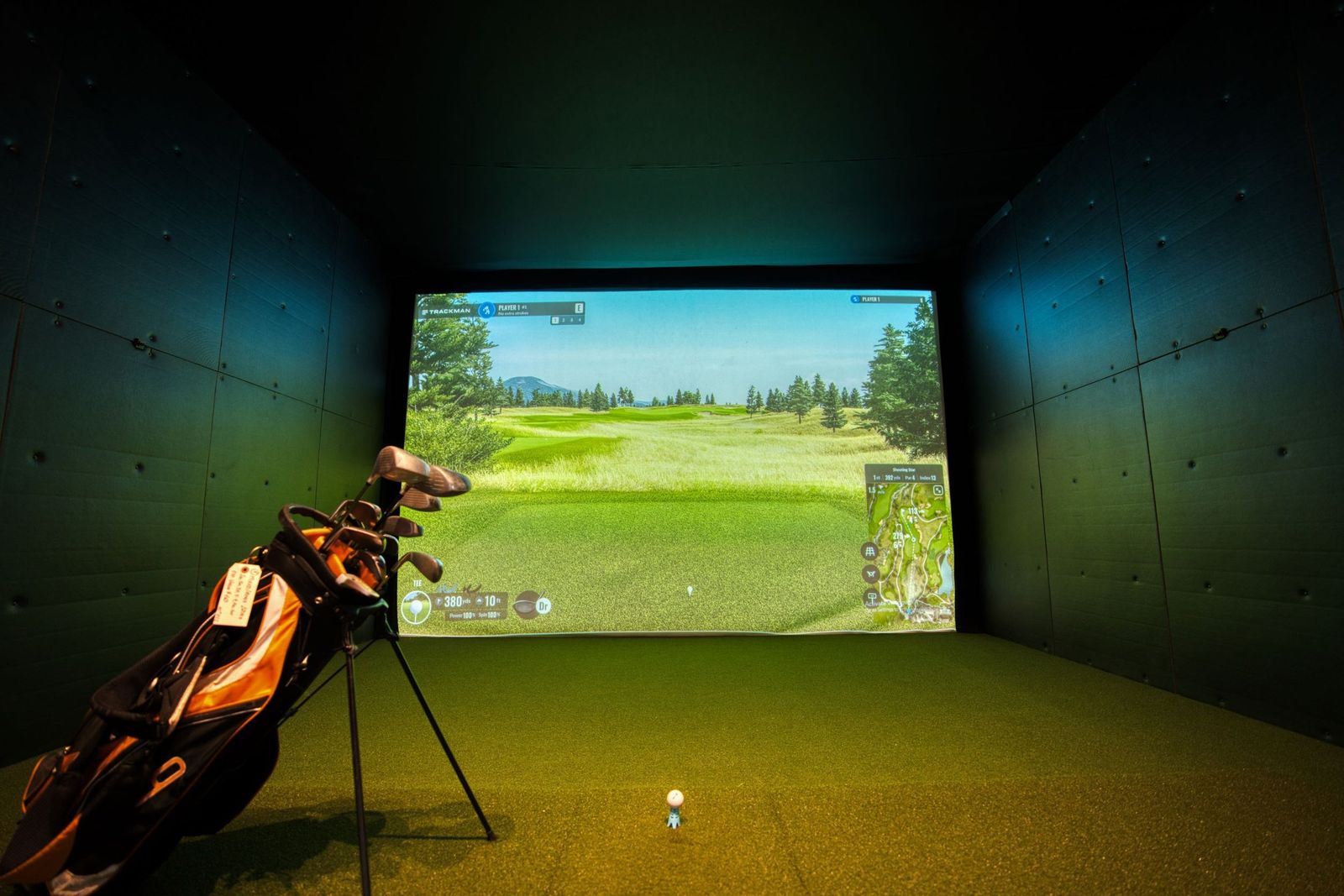
None of that costs extra, either. Core launch data, ball speed, carry, total distance, launch angle, club speed, works with zero subscription. The unit also ships with Home Tee Hero course-play access and five free E6 Connect courses out of the box, no credit card required. Garmin does sell an optional membership on top; more on what that actually buys further down. Skip it entirely if practice numbers are all you’re after.
What it doesn’t
Putting is the real gap, and it’s worth being precise about what “gap” means here rather than repeating the vague line that shows up in most reviews. The R10 doesn’t measure putts, not poorly, not approximately, not at all. There’s no putting mode, no green-reading data, no stroke tracking. When a simulated round in Home Tee Hero or E6 Connect puts you on the green, the software hands you an automatic result based on distance from the hole: inside about three yards it’s a gimme one-putt, three to twelve yards is a two-putt, anything longer defaults to a three-putt. That’s a reasonable design choice for a $500 radar unit, since building accurate low-speed putt tracking into the same sensor that reads 100+ mph drives is a genuinely hard engineering problem, but it means the R10 answers zero questions about your actual putting stroke. Anyone who wants real putting feedback needs a dedicated mat or a different launch monitor category entirely, not a firmware update.
Space and ceiling height, the numbers that actually matter
Indoor ceiling height matters more than most buyers expect going in, and it’s worth putting real numbers on it instead of a vague “make sure you have clearance” warning. Garmin’s own placement guidance calls for at least 9 feet of ceiling height indoors, with 10 feet recommended so a full swing has genuine margin above the clubhead at the top of the backswing. On room depth, the minimum workable setup puts the unit 6 feet behind the ball with 8 feet of room in front of it, for 14 feet of usable depth; Garmin’s preferred setup is 8 feet behind the ball and 13 feet in front, closer to 15 feet of total room length, because the extra distance gives the radar more of the ball’s flight path to read before it hits the net or screen.
Ceiling height below that 9-10 foot range isn’t a minor accuracy tax, it’s a real problem. Garmin’s own support forum has documented reports of carry distances reading 20+ yards short in basements with low drop ceilings, which is a different failure mode than the ±5 yard tolerance Garmin advertises for a properly-clearanced setup. If your garage or basement has ductwork, a drop ceiling, or any obstruction inside that 9-foot zone, measure before you buy rather than after.

What the optional membership actually buys
Garmin sells a Garmin Golf Membership on top of the R10 itself, $99.99 a year or $9.99 a month, with a 30-day free trial to test it before committing. It’s genuinely optional; the R10’s core launch data, and the five free E6 Connect courses plus Home Tee Hero access that ship with the unit, work without ever entering a credit card. What the membership actually unlocks is more virtual courses (Garmin advertises 43,000+ through Home Tee Hero), video capture and cloud storage of your swings, green contour data for reading breaks on the virtual green, and weekly online tournaments against other Garmin Golf members.
None of that changes the launch monitor’s accuracy or data quality; it’s a course-content and social-features subscription layered on top of hardware that already does its core job for free. Buy it if the course library and tournament format matter to you. Skip it if you bought the R10 to see real numbers on your own swing, which is the more common reason people land on this unit in the first place.