Launch monitor · priced July 12, 2026
Rapsodo MLM2PRO Cost: $699.99 Dual-Camera Unit
The MLM2PRO is $699.99 with a $199.99/year membership gate on full simulator play. Here's what you get free versus what you're actually paying for.
- Dual high-speed camera + Doppler radar hybrid, Impact Vision at 240fps
- 15 data points: 8 measured, 7 calculated
- Spin data requires RPT golf balls (included, 3-ball starter sleeve)
- Premium membership required for full sim course play
- Works indoors at shorter distances than pure-radar units
Via PlayBetter Partners. As an Amazon Associate and affiliate partner, CaddieBay earns from qualifying purchases.

The MLM2PRO sits one step above the Garmin R10 on both price and capability. It pairs dual high-speed cameras with radar, so it captures club-face data (face angle at impact, swing path, strike location) that pure-radar units can’t see at all.
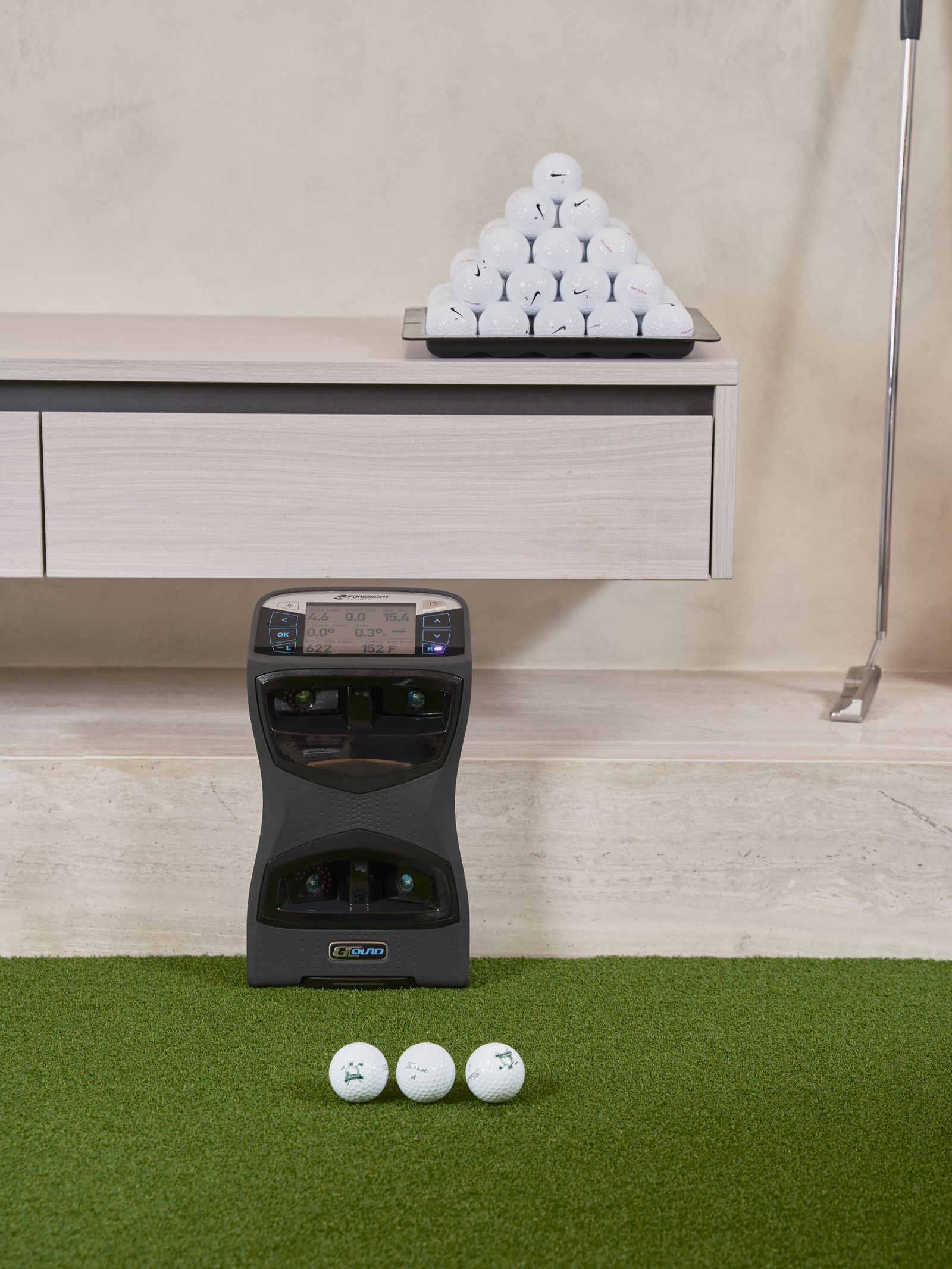
The catch is the membership. Hardware is $699.99, though Rapsodo periodically discounts it by about $100 (it’s shown as low as $599.99 in recent promotions, with a 45-day Premium trial bundled into every purchase regardless of price paid). Full simulator course play and the complete data overlay (spin axis and shot-shape overlays included) sit behind a $199.99/year Premium Membership, though Rapsodo has run a $599.99 lifetime option as an alternative to the annual fee. Compare the real number, hardware plus year-one membership, against a no-subscription unit before deciding this is the budget pick.
What it actually measures
The MLM2PRO reports 15 total data points: 8 measured directly by the camera-and-radar sensor stack (ball speed, club speed, launch angle, launch direction, angle of attack, club path, spin rate, and spin axis) and 7 derived from those readings (smash factor, carry distance, total distance, side carry, descent angle, shot apex, and shot type). The camera side, branded Impact Vision, captures the moment of contact at 240 frames per second, which is what makes the face-angle and path data possible at all on a device this size.
There’s a real catch buried in that spec sheet, though: spin rate and spin axis are only measured with Rapsodo’s own RPT (Rapsodo Precision Technology) golf balls, which carry a printed Truvis dot pattern the camera uses to track ball rotation. Standard range balls will still give you ball speed, launch angle, and the club metrics, but not spin. A 3-ball starter sleeve of RPT balls (Titleist Pro V1 or Callaway Chrome Tour, in RPT form) ships in the box, and replacement RPT balls are a running cost worth factoring in if spin data matters to your practice, since they’re not something you can substitute with balls already in your bag.
Where it earns the extra cost
Club-face data is the differentiator. If you’re diagnosing a slice or working on strike consistency, seeing face angle and path separately from ball flight is worth more than raw carry-distance accuracy. The R10 can’t show you that at any price. It does cost about $200 more than the R10 up front, before the membership question even comes into it.
How it holds up against pricier units
Rapsodo has published its own head-to-head comparison against the Foresight GC3, a launch monitor that costs roughly 10x as much. On ball speed, the two units’ readings deviated by an absolute mean of just 0.37 m/s, with over half of all measurements landing within 0.27 m/s of each other. Spin axis deviated by a mean of 1.44 degrees, with 99.94% sign agreement (both units agreeing on which direction the ball was curving), and back spin deviated by a mean of 69.28 RPM, tightest at lower spin ranges and spreading out somewhat at higher RPM. Launch angle was the weakest match of the metrics tested, with a 1.13-degree mean deviation. That’s a vendor-published study, so treat the exact percentages as Rapsodo’s own framing rather than independent lab testing, but the pattern lines up with what independent reviewers report separately: the MLM2PRO’s full-swing numbers track closely with far more expensive dual- and tri-camera systems, while the GC3’s three-camera system (versus the MLM2PRO’s two) holds a real edge in low-light consistency and is the more bulletproof choice for a permanent, dimly lit garage bay.
Space and setup
Outdoors, the MLM2PRO sits 6.5-8.5 feet directly behind the ball, aimed down the target line. Indoors, plan for a little more than 14 total feet of bay length, roughly 8 feet from ball to net plus the same 6.5-8.5 feet of setback behind the ball for the unit itself. That’s worth checking against your actual room dimensions before buying; a shorter garage bay may need the unit repositioned closer than ideal, which can affect capture consistency.
Where the subscription bites
Casual range-session use, hitting balls at a screen without course play, works without the membership. The moment you want to play a simulated round of golf against real course data, the subscription becomes mandatory. Budget the full $900 first-year cost, not the $699.99 sticker price, when comparing this to the R10.

The app itself is also the point of entry to the wider simulator ecosystem: the MLM2PRO connects over iOS or Android and feeds data into GSPro, E6 Apex, E6 Connect, and Awesome Golf, so the hardware decision doesn’t lock you into Rapsodo’s own software if you’d rather run full rounds through GSPro’s course library instead.
Whichever way the membership math lands, the hardware decision and the subscription decision are genuinely separate calls. Buy the camera-and-radar accuracy for what it is; decide on the membership once you know whether course play matters to you.